Assessed Value vs Fair Market Value: What Every Homeowner Needs to Know in 2026
Reading time: 8 minutes
Table of Contents
- What’s the Real Difference?
- How Assessed Value Actually Gets Calculated
- How Fair Market Value Works in Today’s Market
- The 2026 Gap: Why It’s Wider Than Ever
- Real Homeowner Scenarios
- Common Challenges (and How to Fix Them)
- Comparing the Two Values Side-by-Side
- Your Roadmap Forward
- FAQs
Ever opened your property tax bill and thought, “Wait, my house isn’t worth THAT”? Or maybe you’ve seen your neighbor’s home listed for sale at a price that seems wildly disconnected from what the county says it’s worth. You’re not imagining things. This confusion trips up thousands of homeowners every year, and honestly, the system isn’t designed to make it easy.
Let’s untangle this once and for all.
What’s the Real Difference?
Here’s the straight talk: assessed value and fair market value answer two completely different questions. Assessed value answers “how much should this homeowner pay in property taxes?” Fair market value answers “what would a willing buyer actually pay for this house today?”
They’re calculated by different people, for different purposes, using different timelines. That’s precisely why they rarely match.
- Assessed value — Determined by your local tax assessor’s office, often only updated every one to three years (sometimes longer), and used strictly to calculate property tax obligations.
- Fair market value — Reflects real-time market conditions, comparable sales, buyer demand, and is what appraisers and real estate agents estimate when a home is bought, sold, or refinanced.
How Assessed Value Actually Gets Calculated
Municipal assessors typically use a mass appraisal system — meaning they evaluate entire neighborhoods at once using formulas, rather than walking through every single home. Most jurisdictions apply an “assessment ratio,” which is a percentage of fair market value used specifically for tax purposes.
The Assessment Ratio Explained
For example, if your county uses an 80% assessment ratio and your home’s estimated market value is $450,000, your assessed value would land around $360,000. Tax rates (often called mill rates) are then applied to that assessed figure — not the market value.
This is why two identical houses on the same street can have wildly different tax bills if one was reassessed recently and the other wasn’t. According to the National Taxpayers Union Foundation, an estimated 30-60% of taxable property in the U.S. is over-assessed in any given year, which is precisely why appeal processes exist.
Reassessment Cycles Vary Widely
Some states, like California under Proposition 13, cap annual assessment increases at 2% regardless of market swings, unless the property changes ownership. Other states, like Texas, reassess annually and can see dramatic year-over-year jumps when local markets heat up. Knowing your state’s cycle is critical — it directly affects how “stale” or “current” your assessed value really is.
How Fair Market Value Works in Today’s Market
Fair market value is more fluid. It’s shaped by comparable sales (“comps”), current mortgage rates, buyer competition, and even seasonal timing. In 2026, with average 30-year mortgage rates hovering around 6.4-6.7% according to Freddie Mac’s early-year data, buyer affordability continues to shape how quickly homes sell and at what premium over asking price.
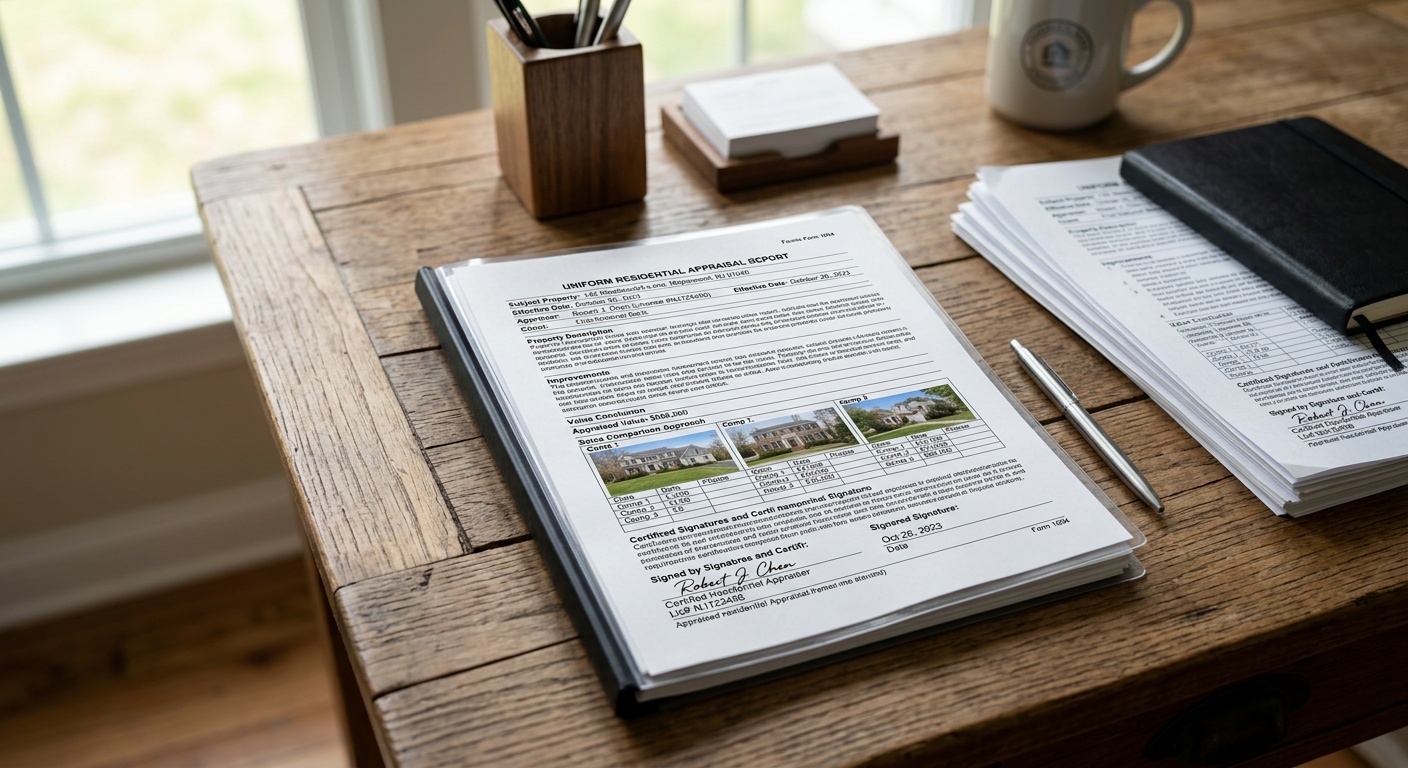
Appraisers determine fair market value by examining at least three comparable properties sold within the last six months, adjusting for square footage, lot size, upgrades, and condition. Real estate agents use similar logic when creating a Comparative Market Analysis (CMA) for sellers.
The 2026 Gap: Why It’s Wider Than Ever
Here’s where it gets interesting. Home values nationally rose roughly 38% between 2020 and 2025 according to the Federal Housing Finance Agency’s House Price Index, but many local assessment offices simply couldn’t keep pace administratively. The result? A growing chasm between what homes are assessed at and what they’d actually sell for.
Quick scenario: Imagine you bought a home in 2019 for $280,000. By 2026, comparable homes in your neighborhood are selling for $410,000. If your county last reassessed in 2022, your assessed value might still reflect something closer to $320,000 — leaving a $90,000 gap between tax reality and market reality.
Real Homeowner Scenarios
Case 1 — The Underassessed Advantage: A homeowner in a slower-reassessment state like Michigan bought a home in 2021. By 2026, market value climbed 25%, but her assessed value only rose 8% due to statutory caps. She’s paying less tax than market value would suggest — a quiet financial win, at least until the next reassessment cycle catches up.
Case 2 — The Overassessed Surprise: A family in a fast-reassessing Texas county saw their assessed value jump 22% in a single year after a wave of new-construction sales inflated neighborhood comps. Their actual home, an older property needing repairs, wasn’t worth nearly as much. They successfully appealed and got a $38,000 reduction in assessed value after presenting contractor repair estimates and photos.
Case 3 — The Refinance Wake-Up Call: A homeowner assumed his assessed value ($295,000) was close to what his home would appraise for during a refinance. The actual appraisal came back at $365,000 — great news for his loan-to-value ratio, but it also reminded him that his low tax bill wouldn’t last forever once reassessment caught up.
Common Challenges (and How to Fix Them)
Challenge 1: Confusing the Two Numbers During a Sale
Sellers sometimes anchor their listing price to assessed value, either overpricing or underpricing significantly. Fix: Always request a current CMA from a licensed agent rather than relying on the county’s number.
Challenge 2: Missing the Appeal Window
Most jurisdictions give homeowners a narrow 30-60 day window after receiving a new assessment notice to file an appeal. Fix: Mark your calendar the moment you receive your annual assessment notice, and gather comps immediately if the number looks off.
Challenge 3: Assuming Assessed Value Reflects True Equity
Homeowners sometimes underestimate their equity position when assessed value lags behind market gains. Fix: Get a professional appraisal or agent CMA before making major financial decisions like a HELOC or bridge loan.
Comparing the Two Values Side-by-Side
| Factor | Assessed Value | Fair Market Value |
|---|---|---|
| Set By | County/municipal tax assessor | Appraisers, agents, buyers/sellers |
| Update Frequency | Every 1-5 years (varies by state) | Fluctuates in real time with market |
| Primary Use | Calculating property taxes | Buying, selling, refinancing, insurance |
| Typical Accuracy | Often 70-90% of market value | Closely reflects current conditions |
| Can You Appeal It? | Yes, within a set window annually | Not directly; based on negotiation/comps |
As appraiser and industry consultant Marcus Feld put it in a 2025 National Association of Realtors panel: “Assessed value tells you what the government thinks you owe. Fair market value tells you what the world thinks your home is worth. Homeowners who conflate the two either overpay on taxes or misjudge their equity — sometimes both.”
Your Roadmap Forward
Understanding this distinction isn’t just academic — it directly affects your tax bill, your borrowing power, and your negotiating leverage. As reassessment technology improves through 2026 and 2027 (many counties are piloting AI-assisted mass appraisal tools), the gap between assessed and market value may start narrowing, but it won’t disappear.
Here’s your practical checklist:
- Pull your latest assessment notice and compare it against recent neighborhood sales on public listing sites.
- Calculate your local assessment ratio so you know whether your county intentionally assesses below market value.
- Mark your appeal deadline the moment a new assessment arrives — don’t wait until the bill shows up.
- Order an independent appraisal before refinancing, selling, or applying for a home equity line of credit.
- Revisit your homeowner’s insurance coverage annually, since rebuild costs track closer to market value than assessed value.
Pro Tip: Keep a simple folder — digital or physical — with your last three years of assessment notices, one CMA, and any renovation receipts. When appeal season arrives, you’ll have your case built before your neighbors even open their envelope.
Frequently Asked Questions
Can my assessed value ever be higher than fair market value?
Yes, particularly in fast-reassessing counties or after a market correction. If your area recently reassessed based on peak sales prices and the market has since cooled, your assessed value can temporarily exceed what your home would actually sell for. This is one of the strongest grounds for a successful appeal.
Does a lower assessed value mean my home is worth less when I sell?
No. Buyers, lenders, and appraisers rely on fair market value and comparable sales, not the county’s assessment figure. A low assessed value simply means you’re likely paying less in property taxes relative to your home’s true market worth.
How often should I check the gap between these two values?
Review it annually when your assessment notice arrives, and again anytime you’re considering selling, refinancing, or applying for a home equity loan. Markets shift quickly, and staying informed prevents costly surprises in either direction.
So, where does your home stand right now — comfortably under-assessed, uncomfortably over-assessed, or somewhere you haven’t checked in years? There’s no better time than this tax season to find out.
About the Author
