Zillow Zestimate vs Real Appraisal: What Sellers Should Know
Reading time: 8 minutes
You punch your address into Zillow at 11pm, half-curious, half-anxious, and there it is: a number that either makes you grin or makes you spit out your coffee. Then three weeks later, an actual appraiser walks through your home with a clipboard and a laser measurer, and the number they hand you looks nothing like what you saw on your phone. Sound familiar? You’re in good company—and understanding why these two figures diverge could save you from a listing price disaster.
Table of Contents
- What Is a Zestimate, Really?
- How a Real Appraisal Works
- Why the Numbers Don’t Match
- Real Seller Scenarios in 2026
- Side-by-Side Comparison
- Common Challenges & Fixes
- FAQs
- Your Pricing Roadmap Forward
What Is a Zestimate, Really?
Zillow’s Zestimate is an algorithm-generated estimate built from public tax records, MLS data, user-submitted details, and recent comparable sales. Zillow itself has always been transparent that it’s a starting point, not a professional valuation. As of 2026, Zillow reports a median error rate of roughly 2.4% for on-market homes and closer to 7-8% for off-market properties—meaning for a $450,000 home, the Zestimate could realistically swing by $30,000 or more in either direction.
The algorithm doesn’t walk through your kitchen. It doesn’t notice that you gutted the primary bathroom last spring or that your foundation has a hairline crack the neighbors don’t have. It’s pattern-matching against data, not judging craftsmanship, condition, or curb appeal in person.
How the Algorithm “Thinks”
Zillow’s model leans heavily on statistical regression and machine learning trained on millions of transactions. It weighs square footage, bedroom/bathroom count, lot size, and neighborhood sale trends. When local inventory is thin—as it has been in many mid-sized metros throughout 2026—the model has fewer comparable sales to anchor to, and accuracy tends to drop noticeably.
How a Real Appraisal Works
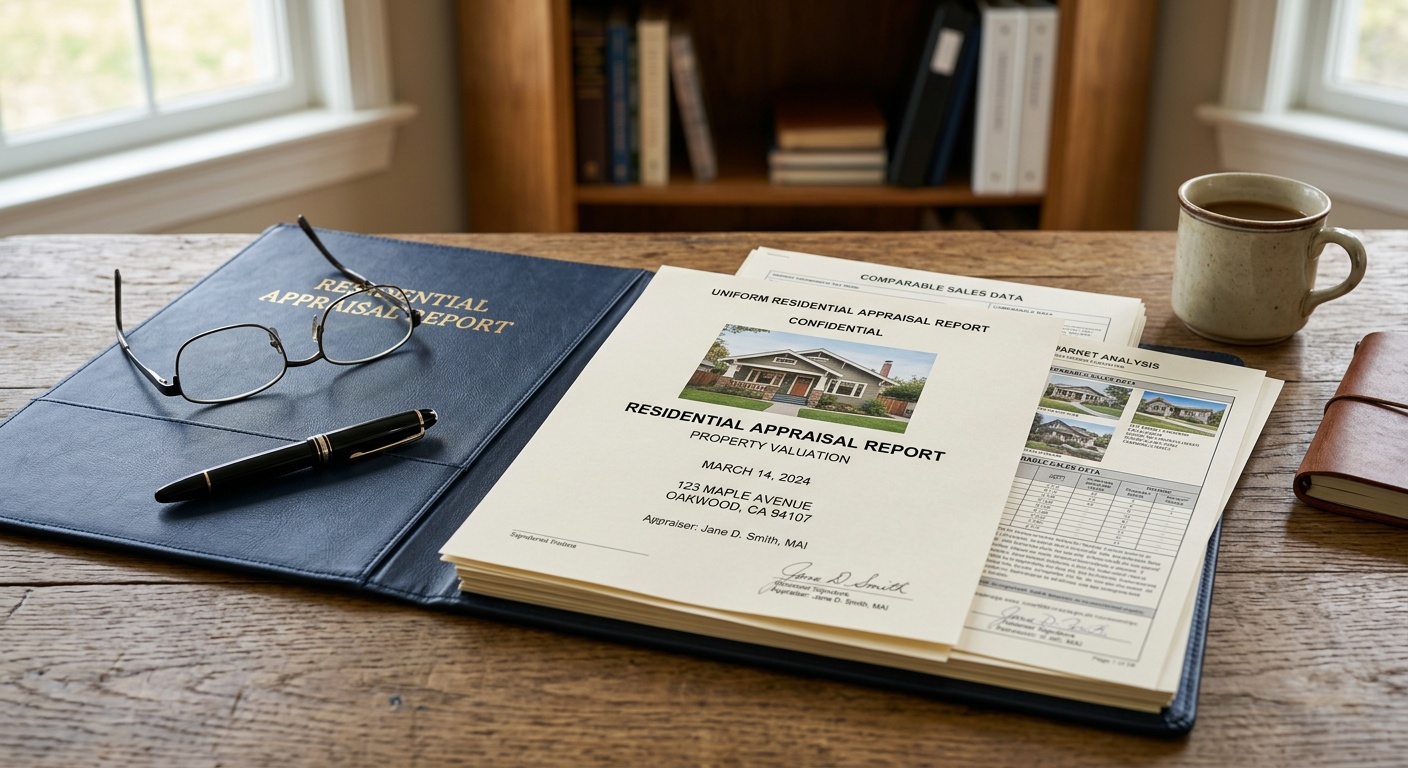
A licensed appraiser is a human professional, often with a state certification and years of local market experience, who physically inspects your property. They evaluate structural condition, recent renovations, mechanical systems, and even subtle factors like natural light or floor plan flow. Then they select three to six truly comparable sales—same school district, similar age, similar square footage—and adjust for differences line by line.
Appraisals are typically ordered by a lender during a mortgage transaction, which means the appraiser has a fiduciary and professional obligation to produce an unbiased, defensible number. Unlike a Zestimate, an appraisal can be legally challenged or disputed, and it directly affects whether a buyer’s loan gets approved.
What Appraisers Physically Check
- Roof age, HVAC condition, and foundation integrity
- Interior finishes, upgrades, and overall maintenance level
- Lot topography, view, and any easements or encroachments
- Comparable sales within the last 3-6 months, adjusted for differences
- Local market trends, including absorption rate and days on market
Why the Numbers Don’t Match
Here’s the straight talk: the gap between a Zestimate and an appraisal isn’t a glitch—it’s a structural difference in methodology. One is a statistical guess based on data patterns; the other is a professional judgment based on physical inspection and localized comparables.
According to a 2026 industry survey by the National Association of Realtors, 61% of agents said Zestimates were “somewhat” or “significantly” misaligned with final sale prices in their market during the previous year, particularly in rural areas and neighborhoods with unique architecture. Zillow itself acknowledges this limitation for homes with fewer comparable sales nearby.
Quick Scenario: Imagine you’ve just finished a $60,000 kitchen and primary suite renovation. Your Zestimate might tick up modestly if you update your home facts on Zillow, but it likely won’t fully capture the value buyers would pay for that upgrade. An appraiser, standing in that renovated kitchen, will.
Real Seller Scenarios in 2026
Case 1: The Overconfident Seller. Maria in suburban Phoenix saw her Zestimate at $512,000 and listed at $525,000, assuming she’d found a bargain buyer’s dream. The appraisal came back at $478,000 because her home’s HVAC system was 18 years old and the comps included two newer-construction homes nearby that Zillow’s algorithm had weighted incorrectly. The deal nearly fell through until Maria renegotiated.
Case 2: The Underestimated Renovation. James in Raleigh had a Zestimate of $389,000 despite a fully finished basement and new solar panels. When he got a pre-listing appraisal, it came back at $421,000—a $32,000 gap that Zillow’s algorithm simply hadn’t accounted for because those upgrades weren’t reflected in public records yet.
Case 3: The Rural Surprise. A seller in a small Vermont town found her Zestimate showed “N/A” confidence in some months due to sparse comparable sales. A local appraiser familiar with the area still produced a solid valuation using comps from a 12-mile radius and seasonal adjustment factors—something no algorithm was built to replicate.
Side-by-Side Comparison
| Metric | Zestimate | Professional Appraisal |
|---|---|---|
| Average Error Rate | 2.4%-8% (varies by market) | Under 1% (lender-accepted) |
| Physical Inspection | No | Yes, full walkthrough |
| Cost to Seller | Free | $400-$700 typical in 2026 |
| Turnaround Time | Instant | 3-10 business days |
| Legal/Lending Weight | None | Required for mortgage approval |
Accuracy by Market Type (2026 Estimates)
Common Challenges & Fixes
Challenge 1: Overpricing based on an inflated Zestimate. Fix: Order a comparative market analysis (CMA) from a local agent before setting your list price. Agents pull live, on-the-ground comps that reflect current buyer behavior, not historical averages.
Challenge 2: Buyers citing the Zestimate to justify lowball offers. Fix: Prepare a one-page fact sheet showing recent renovations, upgraded systems, and comparable sales that support your asking price. Data beats anecdote in negotiations.
Challenge 3: Appraisal comes in lower than the accepted offer. Fix: Request a “reconsideration of value” with the appraiser, providing additional comps or documentation of upgrades they may have missed. This isn’t guaranteed to work, but it’s a legitimate and often successful process when the appraisal genuinely overlooked something material.
FAQs
Should I ever use a Zestimate to set my listing price?
Use it as a rough conversation starter, not a pricing strategy. Pair it with a professional CMA and, ideally, a pre-listing appraisal if your home has unique features or recent upgrades that public records haven’t caught up with yet.
Can I update my home’s details to improve Zestimate accuracy?
Yes. Zillow allows homeowners to claim their listing and update square footage, bed/bath counts, and renovation details. This can nudge the estimate closer to reality, though it still won’t replace a physical inspection.
What happens if the appraisal comes in below the sale price?
The buyer’s lender typically won’t finance more than the appraised value, which means the buyer must either renegotiate the price, bring extra cash to closing, or challenge the appraisal. This is one of the most common deal-threatening moments in a 2026 transaction, especially in competitive bidding situations.
Your Pricing Roadmap Forward
Ready to transform pricing uncertainty into a confident selling strategy? Here’s your practical checklist:
- Step 1: Pull your Zestimate for reference, but treat it as a rough sketch, not a blueprint.
- Step 2: Request a CMA from an experienced local agent who knows your specific neighborhood’s nuances.
- Step 3: Consider a pre-listing appraisal, especially if you’ve made significant renovations that public records haven’t reflected yet.
- Step 4: Document upgrades with receipts, permits, and before/after photos to support your value in negotiations.
- Step 5: If an appraisal comes in low, don’t panic—request a reconsideration with solid comparable data.
As automated valuation models keep improving with AI-driven data feeds in 2026 and beyond, the gap between algorithms and appraisers may narrow—but it won’t disappear. Human judgment still catches nuance that data alone can’t measure.
So, the next time that late-night Zestimate check makes your stomach drop or soar, ask yourself: is this number telling me the whole story, or just a data-driven headline? Your home’s true value lives somewhere between the algorithm and the appraiser’s clipboard—and it’s worth the effort to find it precisely.
About the Author
